How to Vet a Wholesale Clothing Supplier Before Your First Order
How to Vet a Wholesale Clothing Supplier Before Your First Order
Most bad wholesale orders aren't bad luck. They're the result of skipping a few boring checks because the prices looked great and the minimum was low. A supplier with a slick website and a friendly sales rep can still ship you mismatched sizes, late boxes and fabric that pills after one wash.
The good news is that you can vet a wholesale clothing supplier in a week or two, for far less than the cost of one failed pallet. Here is the process I'd follow, in order, before any money moves.
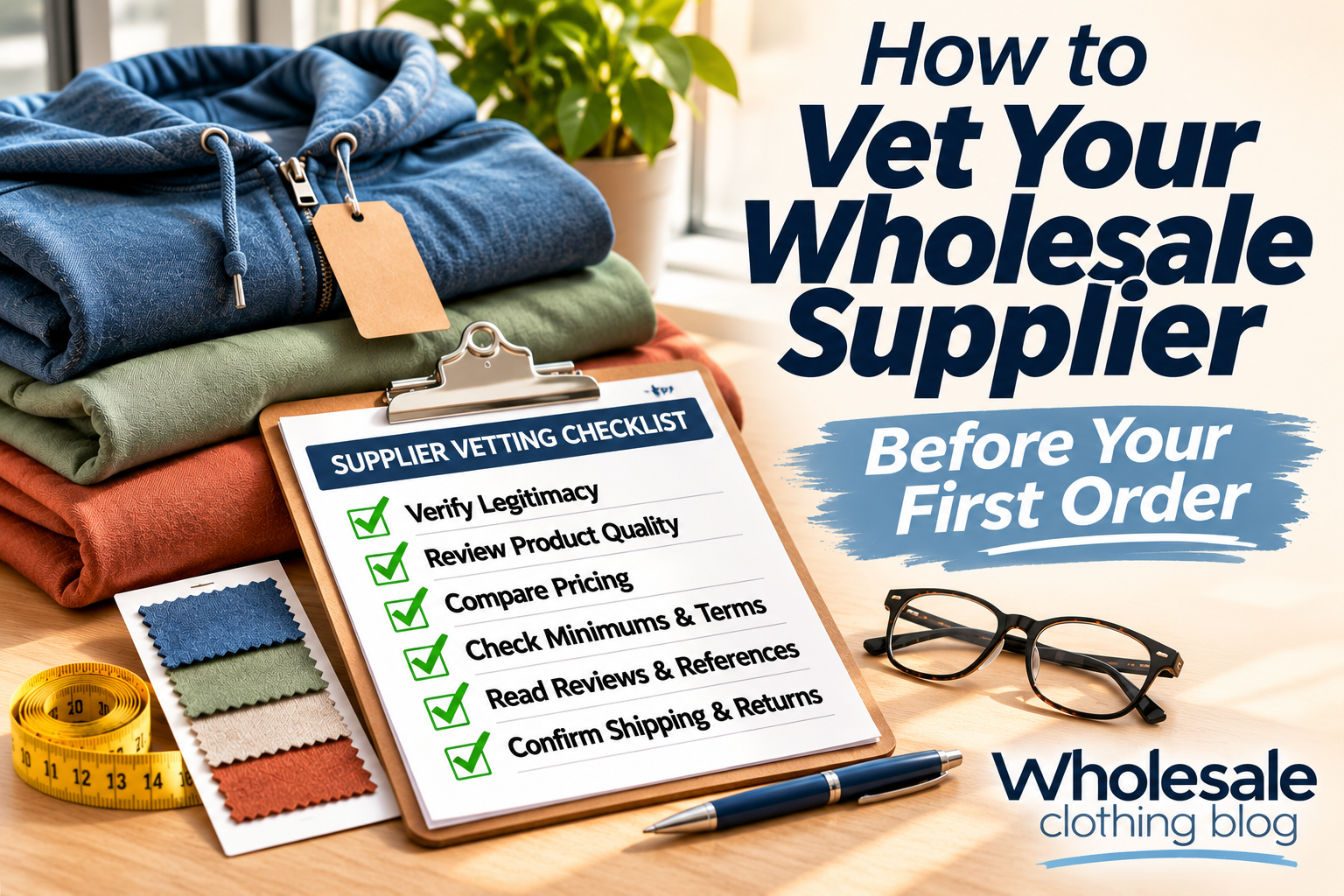
Start With the Paper Trail
Before you look at a single product, confirm the business is real. Ask for the legal business name, a physical address and a phone number that a person answers. Search the address on a map. A warehouse or showroom is a good sign. A residential street with no signage isn't automatically a problem, but it means you should lean harder on the later steps.
A legitimate wholesaler will almost always ask for your resale certificate or tax ID before giving you wholesale pricing. That isn't red tape, it's how they stay in the wholesale channel. If a supplier hands out wholesale prices to anyone with an email address, they may be a retail middleman marking up someone else's goods.
Also look at how they want to be paid. Credit card, PayPal invoicing and established trade terms give you recourse if something goes wrong. If you're new to all of this, our wholesale buying guide explains minimums, payment terms and how to read a line sheet, which makes these first conversations much easier.
Run Reference Checks That Tell You Something
Ask the supplier for two or three current customers who run a business about your size. A reference who buys $50,000 a month will have a very different experience from you at $1,500. If the supplier refuses or only offers glowing testimonials on their own site, treat that as a soft warning.
When you reach a reference, skip the vague "are you happy?" question. Ask how often orders arrive on the promised date. Ask what the last problem was and how the supplier handled it. Ask whether the product matched the photos and whether reorders of the same style came in consistent. The answer to "what went wrong and what did they do about it" is the most revealing thing you'll hear.
Then look outside the supplier's own list. Search the company name with words like "reviews," "complaints" and "scam," and check seller groups and resale communities. A handful of complaints is normal for any business. A pattern of the same complaint, such as missing shipments or ignored refund requests, is not.
Order Samples the Way a Real Customer Would
A sample order is the cheapest insurance you can buy. Place it through the normal checkout or order process, pay full wholesale price, and don't tell them it's a test. You want to see what an ordinary buyer gets, not what a rep hand-picks and ships overnight.
Track the whole timeline. How long from payment to shipment? Did the tracking number arrive? Was the packaging decent? When the box shows up, check stitching, seams, zippers, labels and fabric weight. Compare actual measurements against the size chart. Wash and dry a few pieces the way your customers will. Photograph everything next to the supplier's listing images to see how close the color and fit really are.
For a first test, a typical range is a few styles in two or three sizes, often somewhere between $150 and $400 depending on the category. That's an example range, not a rule, but the point holds: spend enough to see real variety, not so much that a bad result hurts.
Sarah’s Rule: Sarah's Rule: never make a first order larger than you could afford to write off completely.
Read the Return and Defect Policy Line by Line
Many wholesalers say "all sales final" and still make exceptions for defects, but you want that in writing. Find out the claim window (often 7 to 14 days from delivery), whether you need photos, who pays return shipping, and whether you get a refund, store credit or a replacement.
Here's why it matters, with example numbers. Say you buy 120 pieces at $9 each, a $1,080 order, and 10 arrive damaged. If the supplier offers a full credit on defects, you lose nothing. If they only offer 50 percent credit with a restocking fee, that one order just cost you real margin before you sold a thing.
Ask about cancellations and backorders too. What happens if an item is out of stock after you've paid? Do they ship the rest, substitute something, or refund? A supplier with clear answers to these questions has dealt with the problems before and built a process. One who gets vague is telling you something.
Check the Assortment Against Your Customer
A reliable supplier still isn't the right supplier if their product doesn't fit your shoppers. Look at their catalog next to what your audience is actually buying. Our Fashion Trends coverage is a good gut-check: if a supplier's new arrivals look a season behind, you'll be discounting by the time they land on your shelves.
Ask how often they refresh inventory and whether popular styles can be reordered in the same color and cut. Consistency matters more than people expect. If a top seller comes back in a slightly different fabric or sizing, your repeat customers notice quickly.
If you're sourcing for team or school accounts, reorder consistency matters even more. Dye lots and size runs need to match across orders. Our School Programs page covers what those buyers tend to expect, and it's worth asking any supplier how they handle repeat orders of the same blank.
Red Flags That Should End the Conversation
Some warning signs are worth walking away over. Pricing far below every comparable supplier, with no explanation, usually means seconds, counterfeits or a bait-and-switch. Pressure tactics such as "this price expires tonight" are another. So is a request to pay by wire transfer or gift card to a personal account, which removes any chance of getting your money back.
Watch for stock photos that appear on dozens of other sites, brand-name goods with no authorization paperwork, and a refusal to send samples or answer questions in writing. If you ask for a spec sheet, fabric content or a copy of their terms and get a runaround, that's your answer.
Slow, sloppy communication before the sale is the best preview of life after it. If it takes four days to get a reply when they're trying to win your business, imagine the speed once they have your payment.
Run the Numbers, Then Decide
Once a supplier clears the checks above, work out whether the math supports a real order. Add landed cost per piece: unit price, shipping, duties if any, and a small allowance for defects. Then compare that to your realistic selling price after discounts. If you're pricing across lots of SKUs, it's worth reading about how AI pricing tools can automate margins on bulk apparel so you aren't guessing on every item.
Start with a modest first order, keep every record of what was promised, and review the results after your first sell-through. A good supplier earns bigger orders over time. A mediocre one will show you why within the first two shipments.
When you're ready to move from checking suppliers to building a full sourcing plan, the buying guide linked earlier in this post is the best next step.
More Related Posts