AI Pricing Tools in Resale: Automating Margins on Bulk Apparel
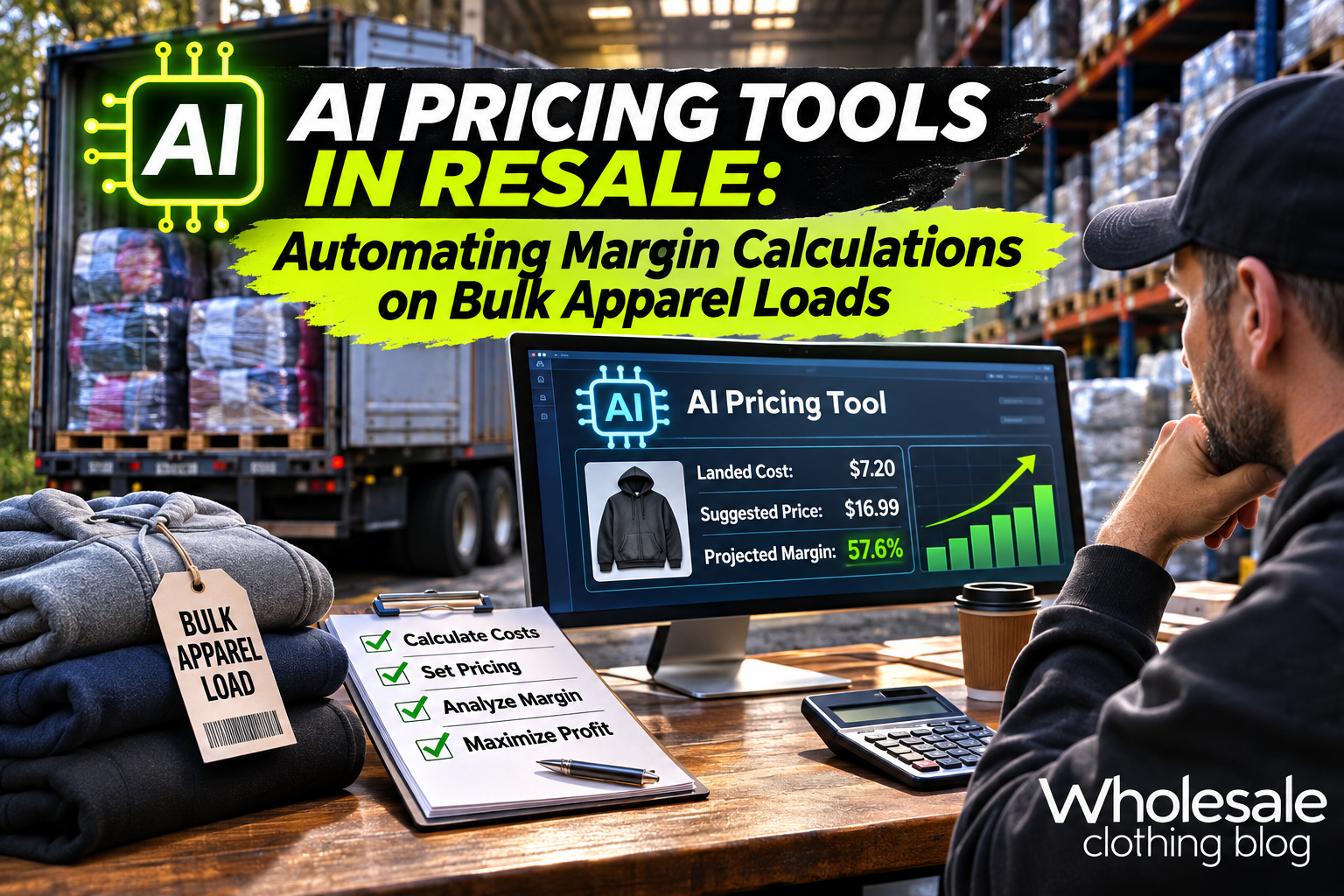
AI Pricing Tools in Resale: Automating Margin Calculations on Bulk Apparel Loads
When a 24-pallet trailer of wholesale apparel hits your receiving dock, your biggest cost isn't freight—it’s the clock. Sorting through thousands of assorted units, grading fabric quality, and manually researching historical sales comps on secondary marketplaces turns inventory intake into an operational bottleneck.
In the 2026 secondary market, manual pricing spreadsheets are officially obsolete. Modern apparel liquidators and boutique owners are deploying automated AI repricing software to calculate true landed costs, scrape real-time market velocity, and protect gross margins before garments ever hit the sales floor.
The Sourcing Problem: Volume vs. Valuation
Buying high-piece-count apparel manifests gives resellers substantial economies of scale, but it introduces an immediate pricing puzzle. In a single 500-piece overstock case, you might find heavy winter parkas, light athletic shorts, fleece pullovers, and seasonal graphic tees. Treating every piece with a flat across-the-board markup leaves money on the table for high-ticket pieces while stalling sales on basic items.
To capture full margin potential, top operators align their intake systems with proven retail resale strategies. Automated pricing algorithms solve this by evaluating each item against active sell-through rates, condition tiers, and historical clearance benchmarks within seconds of scanning the garment's barcode.
How AI Audits True Landed Cost in Real Time
Calculating profit on wholesale apparel requires much more than subtracting wholesale purchase price from MSRP. AI pricing tools integrate full landed cost accounting directly into your inventory management system, calculating:
- Inbound Freight Allocation: Weight- and cube-based freight costs distributed across each individual piece in the shipment.
- Defect & Damage Allowance: Predictive shrinkage models based on historical load grades (shelf-pull vs. customer returns).
- Platform & Payment Fees: Built-in fee schedules for channels like Shopify, Whatnot, eBay, and Poshmark.
- Processing Labor Overhead: Unboxing, steaming, photography, and barcoding costs factored into the target break-even floor.
Operational Pro-Tip: Set hard minimum margin triggers in your repricer (e.g., minimum 45% net margin after freight and fees). If market data shows an item cannot hit that threshold online, route it immediately to local discount bin clearance to recover working capital within 48 hours.
Tracking Shifted Velocity and Seasonal Demand
Consumer demand in apparel fluctuates faster than traditional retail markdown schedules can track. By analyzing search trends, social virality, and secondary sales volume, AI models monitor current apparel trends to dynamically adjust your asking price upward when unseasonable weather or cultural momentum drives up demand.
As we analyzed in our breakdown on luxury blanks vs. streetwear brands in 2026, buyers increasingly pay premiums for fabric density (400+ GSM fleece) and minimalist cuts over traditional designer logos. Visual recognition AI tools can detect fabric weaves, neckline cuts, and weight specs from intake photos, auto-tagging the listings with high-converting search keywords that fetch higher purchase prices.
Selecting the Right Sourcing Foundation
Even the best algorithmic pricing engine cannot save inventory that lacks buyer demand. Successful liquidation businesses combine smart pricing software with disciplined purchasing practices. Before wiring funds on raw unmanifested trailers, consult our comprehensive wholesale buying guide to assess pallet density, retailer return contracts, and seasonal release schedules.
Key Takeaway
Automating your resale pricing workflow removes guesswork, eliminates human pricing bias, and accelerates inventory turnover. In the 2026 wholesale apparel game, profit isn't made by holding inventory until the right buyer appears—it is secured by letting intelligent data move volume at maximum margin every single day.
More Related Posts